
Specifying a detector for a process deck where hydrocarbon vapour may be present is a different exercise from choosing one for a machinery space. The device has to see a fire quickly across an open, ventilated area where smoke disperses before it can accumulate, and it has to do so without becoming an ignition source […]
Author Archives: Atlas Safety
04
Sep
Sep
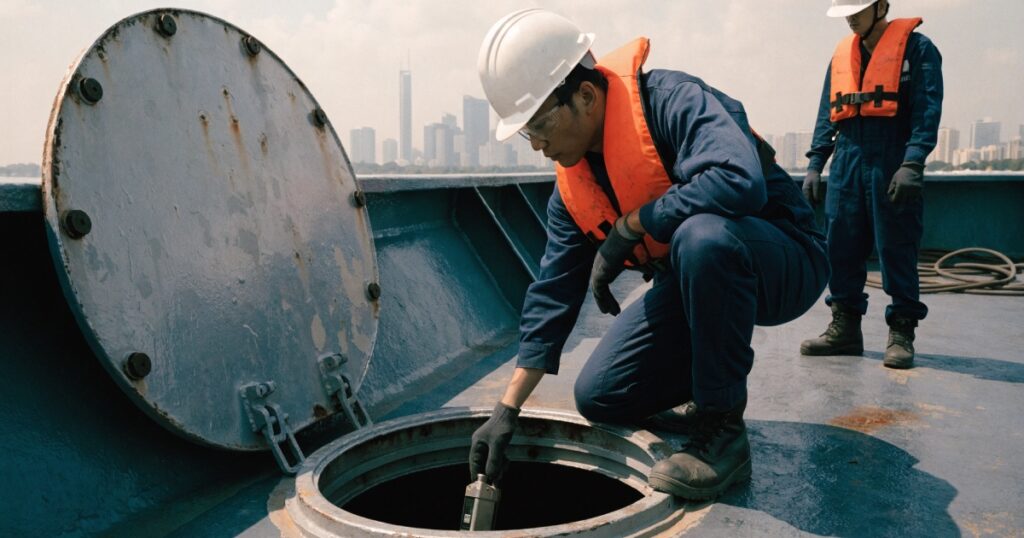
Two crew members are standing at an open hatch with a four-gas instrument that read clean five minutes ago. Whether that reading can be trusted depends on something done earlier in the week, and on whether anyone can tell the difference between the two checks that are supposed to have been done. Bump testing and […]

02
Sep
Sep
Smoke from a container stowed six tiers down has a long way to travel before anyone on the bridge knows about it. On most cargo ships it does not travel to a detector at all. The air is drawn out of the hold and carried to a detection cabinet somewhere else entirely, and everything about […]

31
Aug
Aug
A fire alarm panel that blinks out for two seconds during a blackout test will be written up. Detection has to continue while the ship transfers between supplies, and the arrangement that makes that possible is specified in far more detail than most retrofit packages allow for. Power supply is also the part of a […]

28
Aug
Aug
A chafed cable behind a deckhead panel rarely reaches a superintendent’s morning report. On an addressable fire detection loop, that single point of damage decides whether the control panel keeps watching the rest of the accommodation block or drops an entire section from the display. Loop architecture settles that question long before the fault occurs. […]