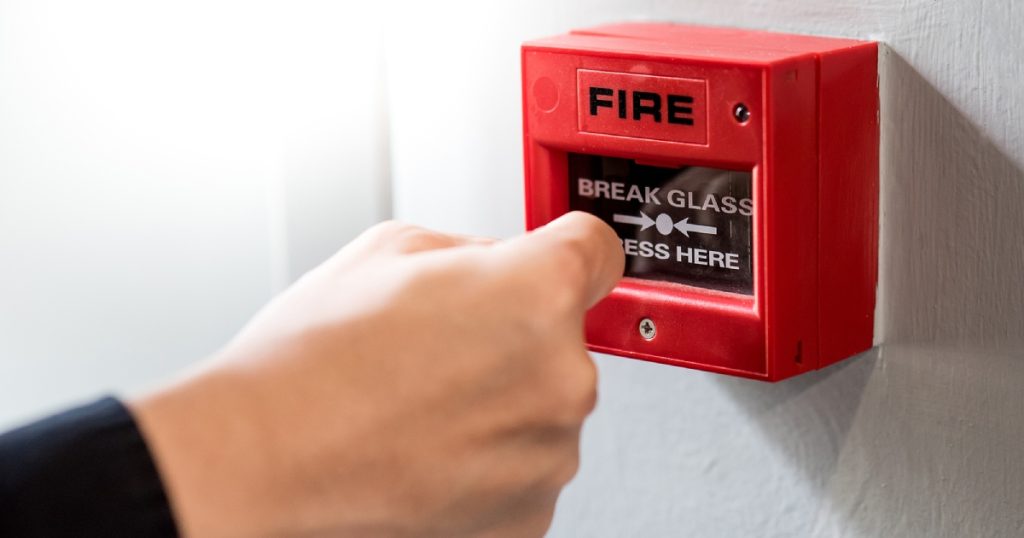
Picture a fire breaking out somewhere below deck, perhaps in the engine room or a cargo hold, in the middle of a transit between Singapore and Colombo. There’s no fire station to call, no neighbouring building to alert, just the crew and whatever systems are already in place. That’s precisely the moment a manual call point earns its keep. It’s a small, unassuming device, usually red, usually mounted at chest height near an exit or corridor, but it can be the difference between a fire caught in its first minute and one that spreads through several compartments.
For fleet owners and operators managing vessels, manual call points are a familiar part of the fire safety system, yet they’re often overlooked until something goes wrong. Perhaps a call point fails to trigger an alarm during a drill, or a false activation pulls the crew away from their duties at an inconvenient hour. Getting the basics right, from choosing the correct type to installing it in the right location, saves both money and stress down the line.
What Is A Manual Call Point?
A manual call point, sometimes shortened to MCP, is a device that allows a crew member to raise a fire alarm by hand rather than waiting for an automatic detector to sense smoke or heat. Most designs use a break glass element or a resettable element that the user presses or pushes to trigger the alarm. Once activated, it sends a signal straight to the vessel’s fire alarm control panel, alerting the bridge and crew so they can respond immediately.
Unlike smoke or heat detectors, which rely on sensing conditions that develop over time, a manual call point depends entirely on someone spotting the fire and acting. That’s why placement, visibility, and ease of use matter just as much as the device itself.
Common Types Of Manual Call Points Used On Vessels
Manual call points aren’t a one-size-fits-all product, and by activation mechanism, they generally fall into two categories:
- Break glass call points – A small glass or plastic element must be broken to activate the alarm. These are widely used and simple to identify at a glance.
- Resettable call points – Uses a flexible element that can be pushed in and later reset without replacing any parts. These are popular on vessels because they reduce the cost and hassle of replacing broken elements after every drill or accidental trigger.
Beyond activation type, the classification society’s requirements will also determine what rating and housing a call point needs for a given area of the vessel, but the mechanism itself usually comes down to one of these two choices.
Where Manual Call Points Are Typically Installed
On most vessels, manual call points are positioned at escape routes, stairwells, corridors, near cabin doors, engine rooms, galleys, and open deck areas. The idea is that wherever a crew member might first notice a fire, there should be a call point within easy reach, ideally no more than a short walk away.
A well-planned layout also reduces false alarms, since call points placed in awkward spots, too close to doors that get knocked, or in high-traffic areas, tend to get triggered accidentally more often. That kind of operational downtime, however brief, adds up over a year of voyages, and it’s one of the more common frustrations vessel operators raise when reviewing their fire safety systems. If you’re auditing your setup, it helps to work through how to conduct a marine fire safety audit step-by-step, since layout and placement issues often surface during that kind of review.
Buying Tips For Vessel Operators
When it comes time to purchase or replace manual call points, a few considerations go a long way towards avoiding headaches later:
1. Check compatibility with your existing fire alarm panel – Not every call point works seamlessly with every control system, and mismatched equipment can cause signal errors or delayed alerts.
2. Prioritise marine certified equipment – Look for products certified to relevant maritime standards and approved by the classification society covering your fleet.
3. Consider resettable designs for high-traffic zones – These reduce ongoing maintenance costs and cut down on the time crew spend replacing broken glass elements.
4. Factor in the operating environment – Open decks, engine rooms, and hazardous cargo areas each call for different ratings, so a single call point type rarely suits an entire vessel.
5. Buy from a supplier who understands compliance – Regulatory requirements shift from time to time, and working with a supplier who keeps pace with them saves you from discovering a compliance gap during an inspection.
Tyco’s manual call points range covers most of these scenarios out of the box. The MCP250M suits general indoor use with a built-in anti-tamper function, the MCP260M is IP67 rated for exposed outdoor and deck areas, and the CP840EX is intrinsically safe for hazardous zones near fuel storage or cargo holds.
Choosing A Trusted Partner For Marine Fire Safety
Manual call points might be one of the simplest devices in a vessel’s fire safety system, but their reliability under pressure is non-negotiable. A call point that fails to register an alarm, or one installed in the wrong zone, can turn a manageable situation into a serious one, and the cost of that failure, in downtime, damage or worse, far outstrips the price of getting the equipment right from the start.
Atlas Technologies Corporation works with fleet owners and operators across Singapore, Malaysia, Indonesia, Greece, and Turkey to supply, install, and maintain fire detection equipment that meets classification society standards and keeps crews protected at sea. Get in touch with the team at Atlas Technologies Corporation to find the right manual call points for your vessel.