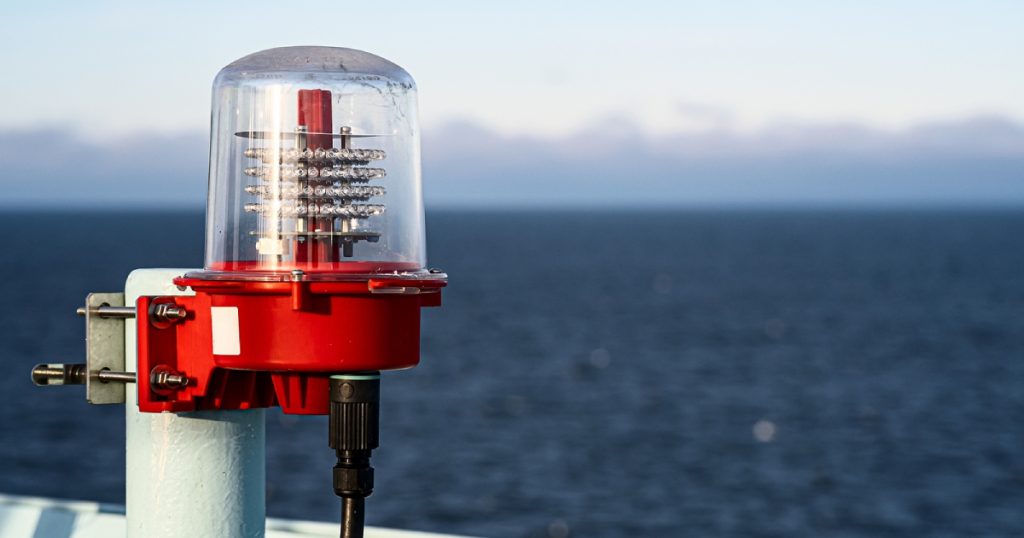
Offshore platforms and vessels are unforgiving environments. Whether you’re managing a floating storage unit off the coast of Greece or overseeing a supply vessel in Indonesian waters, the stakes for safety equipment simply could not be higher. When flammable gases, volatile hydrocarbons, and live electrical systems share the same space, even the smallest spark can trigger a catastrophe, and that makes every piece of equipment on board a critical decision.
Explosion-proof beacon lights are one of those decisions that operators sometimes underestimate, until something goes wrong. Chosen correctly, they are silent sentinels: always on duty, always visible, and certified to keep their own electrical internals from igniting the very atmosphere they’re designed to protect. Get it wrong, and you’re looking at false alarms, regulatory headaches, costly downtime, or worse. This guide is here to help you get it right.
Why Explosion-Proof Isn’t Just a Buzzword
The term “explosion-proof” has a very specific technical meaning in the offshore world. It does not simply mean a rugged or weatherproof light. An explosion-proof beacon is designed so that any internal sparks or arcs are fully contained within its enclosure, preventing ignition of the surrounding hazardous atmosphere. This is an entirely different proposition from a standard industrial beacon, no matter how well-built that beacon might be.
International standards are the backbone of this classification system. The two most relevant frameworks for offshore operators in Singapore, Southeast Asia, and Europe are ATEX (Atmosphères Explosibles), which governs equipment used in the European Economic Area, and IECEx, the International Electrotechnical Commission’s globally harmonised equivalent. Both frameworks use a zone classification system (Zone 0, Zone 1, and Zone 2 for gas and vapour environments) to determine what level of protection each piece of equipment must meet. A beacon certified for Zone 1 is built to operate safely where explosive atmospheres are likely to occur intermittently; Zone 2 covers environments where they occur only rarely.
Before purchasing any beacon, operators must have a clear understanding of the hazardous zone classifications for each location on the vessel or platform where the device will be installed. Installing a Zone 2-rated beacon in a Zone 1 location is a compliance failure. In a region where port state controls in Singapore and Malaysia are increasingly rigorous, that is a risk no sensible operator wants to take.
Key Features to Look For
Not all explosion-proof beacons are created equal. Here are the features worth scrutinising closely during your selection process:
-
Light source technology
LED is now the clear standard for offshore beacon lights. LED units consume less power, generate less heat, last significantly longer than traditional xenon or incandescent alternatives, and are inherently better suited to intrinsically safe designs. For vessels operating long cycles between port calls (common in Greek-owned bulk carriers or Indonesian offshore support vessels), lower maintenance frequency is an operational advantage.
-
IP rating
The Ingress Protection (IP) rating tells you how well the beacon resists water and dust. For exposed offshore decks and superstructure mounting, look for a minimum of IP66 or IP67. Many premium offshore beacons carry IP69K certification, meaning they can withstand high-pressure, high-temperature water jets. This is important in environments where regular hosing down of equipment is standard practice.
-
Material and corrosion resistance
The marine environment is relentlessly corrosive. Aluminium alloy housings with powder-coat finishes, or glass-reinforced plastic (GRP) enclosures, offer strong corrosion resistance. Stainless steel fasteners and marine-grade gaskets are worth specifying, particularly for vessels operating in tropical waters where salt spray and humidity combine aggressively.
-
Operating voltage range
Offshore power systems vary considerably. Check that the beacon you specify operates across the voltage range typical on your vessel or platform; many high-quality units accommodate both AC and DC inputs across a wide range, reducing the risk of compatibility issues during installation.
-
Flash modes and visibility
The beacon’s purpose determines the pattern you need. Emergency evacuation beacons typically use a high-intensity strobe for maximum attention; equipment status beacons may use a steady or slow-flash mode. Ensure the effective intensity (measured in candela) is sufficient for the application. A beacon mounted in a noisy, high-ambient-light environment needs considerably more punch than one in a dimly lit control room corridor.
The Role of Federal Signal Beacon Technology
For operators familiar with the signalling equipment market, the federal signal beacon range represents one of the most well-established product lines in hazardous area applications. Federal Signal’s explosion-proof and ATEX-certified beacon lights are designed for demanding industrial and offshore environments, carrying certifications including IECEx and UL/cUL listings. Their LED strobe and visual signal lights are rated to IP69K, and the range includes models suitable for both safe areas and certified hazardous locations, making them a versatile choice across different zones of a vessel or platform.
What makes Federal Signal products particularly relevant for operators in Singapore and the wider Asia-Pacific region is their global certification footprint. When vessels trade across multiple jurisdictions, having equipment with internationally recognised certifications simplifies compliance considerably. Atlas Technologies Corporation, as an authorised Federal Signal distributor in Singapore, stocks an extensive range of these signalling devices and can advise on the right specification for your application.
For operators managing assets in remote waters, offshore platform fire detection demands a level of precision that goes well beyond standard vessel requirements.
Compliance: More Than a Tick-Box Exercise
Regulatory compliance in offshore beacon selection consists of managing risk in environments where evacuation options are severely limited. The International Maritime Organization (IMO) sets baseline safety standards for vessels through instruments like the Safety of Life at Sea (SOLAS), while class societies such as DNV, Lloyd’s Register, and Bureau Veritas often impose additional requirements on top of flag state rules.
Singapore, home to one of the world’s largest ship registries (the Singapore Registry of Ships surpassed 100 million gross tonnage in January 2024, according to the Maritime and Port Authority of Singapore) has consistently maintained high standards of safety compliance across its fleet. Operators who manage vessels under the Singapore flag, or who frequently call at Singapore and Malaysian ports, should expect close scrutiny during Port State Control inspections, and signalling equipment is part of that picture.
Greece and the Netherlands, as the world’s leading ship-owning nations by tonnage, also set the benchmark for safety culture within their fleets. Procurement teams at Greek ship management companies and Dutch-headquartered operators are typically well-versed in ATEX requirements and tend to demand full documentation and traceability from their suppliers.
The practical takeaway: always request full certification documentation (the ATEX or IECEx certificate of conformity, the Ex marking details, and the manufacturer’s Declaration of Conformity) before finalising any purchase. A product that cannot provide these documents is not worth the risk, regardless of the price point.
Avoiding Common Procurement Mistakes
A number of recurring pitfalls catch out offshore operators and procurement teams, particularly those buying beacon lights for the first time or switching suppliers:
1. Purchasing uncertified or counterfeit explosion-proof equipment
The online marketplace has made it deceptively easy to source beacons bearing ATEX or IECEx markings that have never been through legitimate certification testing. These products may look the part, but they present a genuine explosion risk, and in the event of an incident, they also expose operators to serious legal liability. Always verify certification numbers directly with the issuing body or through your trusted distributor.
2. Selecting a beacon based purely on upfront cost without factoring in total cost of ownership
A cheaper beacon with a shorter service life, higher maintenance requirements, or poor corrosion resistance will cost far more over a three-to-five-year operating cycle on an offshore asset than a premium unit with documented reliability. In remote offshore locations, Indonesian deepwater fields, for example, a beacon failure that triggers a false alarm or disables a warning system during a critical operation carries financial and safety consequences that dwarf the original purchase price difference.
3. Overlooking the importance of technical support and local availability of spare parts
For operators based in Singapore or servicing fleets across Southeast Asia, working with a distributor who holds stock locally and can provide rapid technical guidance is a practical necessity.
Your Trusted Partner for Offshore Safety Signalling
Selecting the right explosion-proof beacon for an offshore application requires a combination of technical knowledge, regulatory awareness, and supply chain reliability. It is not a decision to be made based on a product image and a headline specification alone.
Atlas Technologies Corporation is here to make that process straightforward. As an authorised distributor of Federal Signal products in Singapore, with deep expertise in marine and offshore fire safety systems, Atlas Technologies Corporation brings together certified product knowledge, local stock availability, and field experience across the offshore sector. Whether you are outfitting a new build, replacing ageing equipment on an operational vessel, or reviewing your compliance posture ahead of a survey, our team can guide you to the right solution quickly and with confidence.
Get in touch with Atlas Technologies Corporation today and speak with a specialist who understands the demands of your environment.