
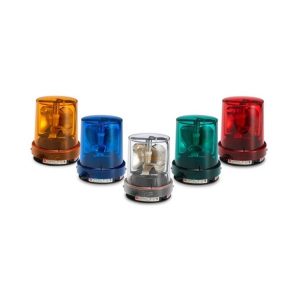



Federal Signal – Visual Signals
Visual Alarms & Signaling Devices by Federal Signal
Visual alarms are a critical component in any effective emergency signalling system, especially in environments where noise levels are high or hearing protection is in use. These visual signalling devices provide clear, unmissable alerts that help safeguard personnel, protect assets, and maintain operational safety.
As a trusted brand globally, Federal Signal offers a wide range of visual alarms engineered for durability, high visibility, and performance across various industrial sectors. Whether you're equipping a control room, production floor, or offshore facility, Federal Signal’s solutions deliver robust, dependable emergency alerts tailored to demanding applications.
Atlas Technologies is proud to be a leading distributor of Federal Signal products in Singapore, offering industry-compliant visual signalling devices suitable for use in hazardous, marine, and heavy-duty industrial settings.
Types of Federal Signal Visual Alarm Products Offered
LED Visual Alarms
LED visual alarms are a modern, energy-efficient solution designed for environments that require consistent, long-lasting performance. Utilising solid-state technology, these alarms deliver high-intensity light output while maintaining minimal power consumption. Common applications include control rooms, cleanrooms, manufacturing lines, and public buildings where continuous visual signalling is essential.
These Federal Signal LED signals offer:
- High visibility with minimal heat generation
- Long operational life, reducing the need for frequent replacements
- Low maintenance design suitable for 24/7 operation
- Seamless integration into control systems and safety panels
As energy-efficient alarms, they contribute to lower operational costs without compromising performance or safety.
Strobe & Rotating Beacons
Designed to command immediate attention, strobe alarms and rotating beacon alarms are vital in high-noise environments or where instant visibility is required. These alarms produce powerful flashes or continuous rotation, making them suitable for warehouses, ship decks, workshops, and transport depots.
Federal Signal strobe alarms are valued for:
- Broad light dispersion and variable flash rates
- Weather-resistant and impact-resistant housing for tough environments
- Mounting adaptability on walls, poles, or machinery
These alarms help ensure visual signals remain unmissable, especially when audible alarms may be ineffective.
Explosion-Proof Visual Alarms
In hazardous zones where combustible gases or dust may be present, explosion-proof visual alarms are essential. Engineered for safety-critical environments, these hazardous location alarms are fully certified for use in flammable or explosive atmospheres.
Safety alarms for explosive environments are commonly deployed in:
- Oil and gas processing facilities
- Offshore drilling rigs
- Chemical storage areas
- Military and defence installations
They offer reinforced enclosures, corrosion-resistant finishes, and compliance with international safety standards, ensuring optimal performance where safety cannot be compromised.
Industrial Applications of Visual Alarms Across Singapore Sectors
Manufacturing and Warehousing
Visual alarms are frequently installed on production lines, control panels, and machinery. They support:
- E-stop alerts that signal operators to halt equipment immediately
- Machinery fault signals that draw attention to malfunctions or overheating
These installations help reduce downtime and keep operations running smoothly in settings that involve heat, dust, or continuous movement.
Oil, Gas and Offshore
In oil, gas, and petrochemical facilities, visual alarms are chosen for their suitability in hazardous zones. Their applications include:
- Explosion-proof signalling to align with zone classifications
- Alerts for emergency shutdowns, gas detection events, and equipment faults
These alarms provide a clear visual cue in environments where noise levels or intrinsic safety requirements limit the use of audible devices.
Marine and Shipping
Visual alarms support vessel and port operations by improving on-site safety communication. Their use covers:
- Navigation safety indicators for restricted zones or movement control
- Engine room status alerts and machinery warnings
- Power failure signals that help crews respond quickly during critical situations
Utilities and Building Management
Facilities management teams rely on visual alarms to reinforce building safety systems. Common applications include:
- Fire alarm panels that highlight active zones and evacuation triggers
- Alerts for pump rooms, generator spaces, and restricted electrical areas
These signals help streamline emergency response and ensure clear communication across large buildings or multi-facility campuses.
Installation Best Practices and Integration Tips
Effective installation plays a major role in ensuring that visual alarms deliver clear, reliable alerts across different environments. Proper placement, pairing with complementary systems, and suitable integration into existing infrastructure all contribute to consistent performance and safer operations.
Optimal Mounting Locations
Visual alarms are typically mounted at corners, exits, and primary entry points where visibility is unobstructed. Positioning them at height and away from direct obstructions helps ensure that alerts can be seen from multiple angles, especially in large or segmented floor areas. This is particularly important when teams need fast recognition during routine operations or emergency events.
Combining Visual and Audio Signalling
Visual alarms are often paired with audio alarms or public address systems to strengthen notification coverage. This dual-modality approach supports communication in noisy work zones, open outdoor areas, or facilities where workers may be dispersed. In quieter or noise-sensitive environments, visual alerts provide a discreet signalling option while audio systems reinforce instructions when required.
Integration with PLC or Fire Safety Systems
Visual alarms can be integrated into PLC networks, fire alarm panels, and building management systems to streamline system-wide responses. This connectivity allows alarms to activate automatically during predefined events, such as equipment faults, temperature thresholds, or evacuation triggers. Integration also simplifies monitoring and maintenance tasks, creating a more coordinated approach to visual alarm integration across a facility.
Professionals may also engage specialists to install federal signal lights in environments that require higher durability, specific voltage requirements, or compliance with industry safety classifications.
