Fire alarm upgrades don’t happen often, which is why they’re so easy to get wrong. Most fleet owners go a decade or more between major system overhauls, and by the time an upgrade rolls around, the terminology has moved on, the technology has changed, and the decision between an addressable system and a conventional one suddenly feels far more complicated than it should.
For vessels, this decision carries weight. Get it right, and you end up with a system that pinpoints problems fast, keeps false alarms manageable, and satisfies every regulator who steps aboard. Get it wrong, and you’re stuck with a setup that either costs more than it needs to or leaves crews guessing where an alarm actually originated. Breaking down the practical differences between the two options makes the choice far less daunting.
How Conventional Systems Work
Conventional fire alarm systems have been the backbone of marine safety for years. They divide a vessel into zones, with each zone wired to a central panel. When a detector in a zone triggers, the panel lights up to show which zone is affected, but it won’t tell you exactly which detector within that zone caused the alert.
For smaller vessels or simpler layouts, this level of detail is often perfectly adequate. A crew responding to a triggered zone in a compact engine room doesn’t need pinpoint accuracy to locate the source quickly. The wiring is generally simpler too, which can mean lower upfront costs and more straightforward installation.
How Addressable Systems Change the Picture
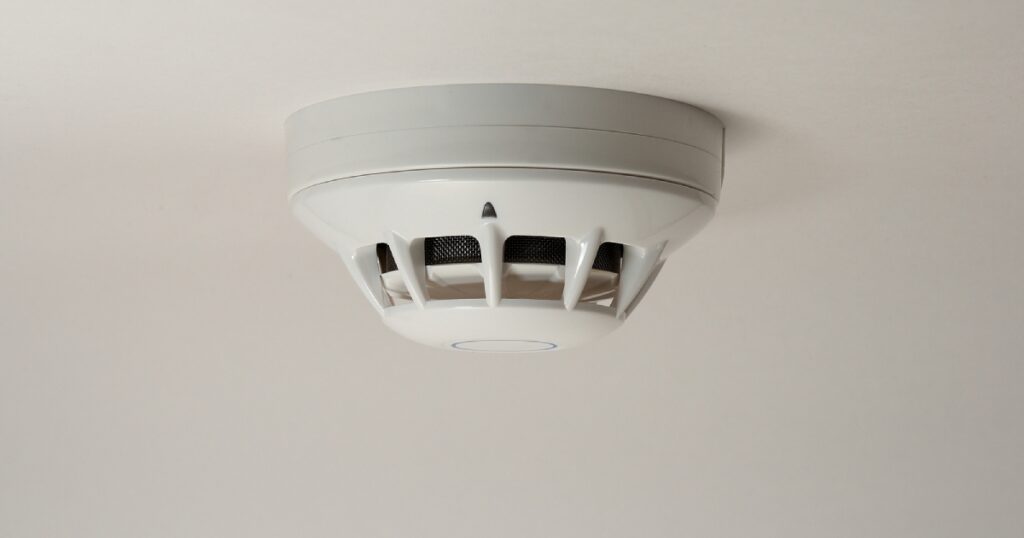
Addressable systems take things a step further. Every single detector, whether it’s a Tyco smoke detector or a heat sensor tucked away in a machinery space, has its own unique identifier on the system. When an alarm triggers, the control panel doesn’t just show a zone, it shows the exact device that raised the alert. On a larger vessel with multiple decks, cargo holds, and accommodation areas, that precision can shave valuable minutes off a crew’s response time, especially when paired with well-placed manual call points aboard vessels that give crew a direct way to raise the alarm the moment they spot trouble. Addressable systems also tend to simplify maintenance, since technicians can identify a faulty detector by its address.
Comparing the Two Side by Side
| Factor | Conventional System | Addressable System |
| Fault location | Zone level only | Exact device level |
| Wiring complexity | Simpler | More involved |
| Upfront cost | Lower | Higher |
| Maintenance efficiency | Slower fault-finding | Faster, more targeted |
| Best suited to | Smaller vessels, simple layouts | Larger vessels, complex layouts |
Neither system is inherently superior. A small harbour tug with a handful of compartments may never need the granularity an addressable system offers, while a large bulk carrier with dozens of zones spread across multiple decks would struggle without it.
Where False Alarms and Downtime Come In
False alarms remain one of the biggest frustrations for fleet operators, regardless of which system is installed. Conventional systems can make troubleshooting a nuisance alarm more time-consuming, since narrowing down the cause within a zone means physically checking every detector in that area. Addressable systems cut this search down considerably, which tends to reduce the operational downtime that comes with chasing a false trigger across a large vessel.
Equipment failure at sea presents its own challenge too. A fault that would take minutes to isolate in an addressable system might take considerably longer in a conventional one, and that difference becomes far more significant when the nearest technician is days away by sea.
Regulatory Compliance and Vessel Size
SOLAS requirements don’t mandate one system type over the other, but they do require alarms capable of alerting crew quickly and reliably across the vessel. For larger, more complex ships, achieving that standard with a conventional system alone can become difficult, particularly as the number of zones grows. Regulators and surveyors are increasingly familiar with addressable technology, and a well-documented addressable setup can make compliance conversations considerably smoother during inspection.
Making the Decision for Your Fleet
A few questions tend to clarify which direction makes sense:
- How many zones or compartments does the vessel have, and how quickly does a crew need to locate a fault?
- What’s the budget for both installation and ongoing maintenance?
- Are false alarms and slow fault-finding already a recurring issue on board?
- Does the vessel’s size and layout need device-level precision, or would zone-level detection suffice?
Working through these honestly tends to produce a far better outcome.
Get the Right System Fitted for Your Fleet
Choosing between addressable and conventional fire alarms comes down to matching the system to your vessel’s size, layout, and operating demands. Atlas Technologies Corporation supports fleet owners across Singapore, Malaysia, Indonesia, Greece and Turkey with alarm system design, installation, and ongoing support built around compliance needs and operational reliability. Speak to the team at Atlas Technologies Corporation to find the right fit for your vessel before your next upgrade.