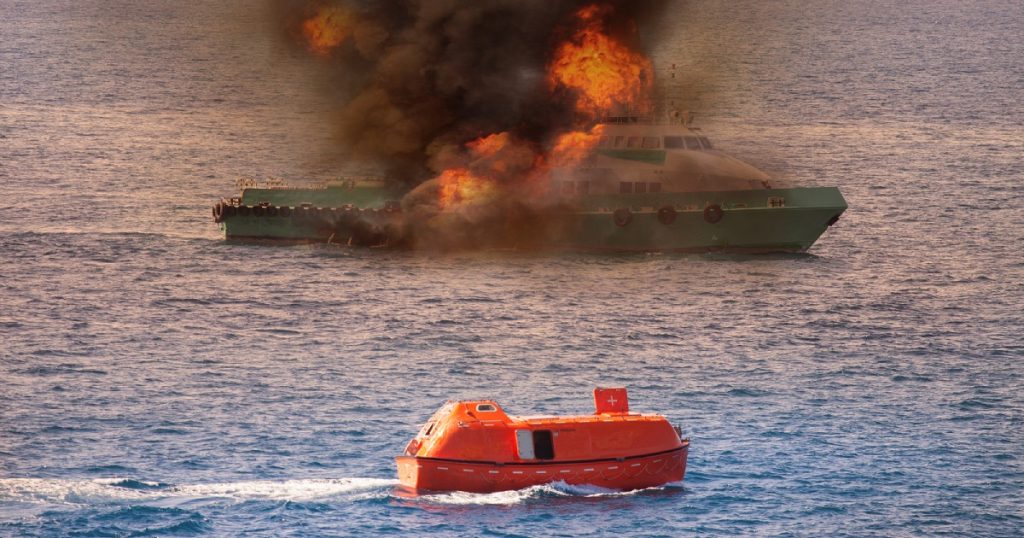
Fire at sea is every maritime operator’s worst nightmare. Unlike on land, there’s no fire brigade around the corner, no quick escape route, and no margin for error when a vessel is hundreds of miles from the nearest port. When a fire detection system fails or isn’t working as it should, the consequences can escalate from manageable to catastrophic within minutes.
For ship owners and fleet managers operating out of Singapore, Greece, Turkey, the Netherlands, and across the broader maritime world, marine fire safety isn’t just a box to tick on a compliance checklist. It’s the difference between a vessel that returns to port safely and one that doesn’t return at all. Understanding what’s truly at stake when detection systems fail is the first step to making sure yours never do.
The Real Cost of a Detection Failure
When people think about fire detection failure, they tend to imagine a missed alarm during an actual fire. But the risks run much deeper than that.
A malfunctioning system can fail in two directions: it can fail to detect a real fire, or it can trigger false alarms. Both are operationally damaging in their own way.
False alarms might seem like a nuisance, but in a maritime context, they carry serious hidden costs. Crew members who repeatedly respond to false alerts become desensitised over time. This is a well-documented phenomenon known as “alarm fatigue.” When a real emergency eventually occurs, the delayed response can be fatal. Beyond crew safety, unnecessary fire suppression activations can cause significant damage to cargo, equipment, and the vessel itself, with repair and insurance costs that quickly mount into the tens of thousands.
On the other side of the coin, a system that fails to detect an actual fire leaves everyone on board exposed. Research published in the NCBI journal Sensors found that ship fires have become one of the most pressing safety concerns in the industry, noting that fires and explosions have overtaken collisions and shipwrecks as the leading cause of major marine insurance claims in recent years. The Maersk Honam fire in the Indian Ocean in 2018, for instance, resulted in an insurance payout expected to exceed USD 500 million, which is the largest container ship general average claim in shipping history at the time.
Regulatory and Legal Exposure
Operators often underestimate the legal dimension of fire detection failures. The International Maritime Organisation’s Safety of Life at Sea (SOLAS) convention mandates strict requirements for fire detection and alarm systems across vessel types. Non-compliance isn’t just a technical failing, it’s a legal liability.
Vessels that fail to meet these standards may find themselves detained at port. The Maritime and Port Authority of Singapore (MPA) takes Port State Control (PSC) detentions seriously, noting that ships found with serious deficiencies may be delayed or detained until those deficiencies are rectified. Detention means a vessel earns nothing while costs keep accumulating by the day.
Fire safety consistently ranks as one of the most cited categories in PSC detentions globally. The Paris Memorandum of Understanding’s 2023 Concentrated Inspection Campaign, which focused specifically on fire safety, found notable non-compliance rates with fire door maintenance and fire drills among inspected vessels. For fleet operators whose ships call at ports across Asia, Europe, and beyond, a poor PSC record can affect not just individual voyages but a company’s entire risk profile, and its standing with insurers and charterers.
For an operator managing multiple vessels across Singapore, Greece, or Indonesia, the reputational damage of a publicised detention can be just as costly as the detention itself.
The Compliance Deadline Pressure
Regulatory pressure is intensifying. New SOLAS requirements adopted in May 2024 mandate that all Ro-Ro passenger ships install fixed fire detectors and fire monitors to protect weather decks by 1 January 2028. As noted by maritime safety experts, operators who delay action not only carry interim risk to passenger safety, but also expose themselves to potential civil liability in the event of a fire occurring before they’ve upgraded their systems.
This is important for operators and managers in Singapore and Greece, especially, where passenger ferry operations and managed fleets include a significant proportion of Ro-Ro vessels. The window to plan, procure, and install compliant systems is narrowing faster than many operators realise, particularly given the lead times involved in sourcing and fitting marine-grade equipment.
This is precisely why staying informed and proactive gives operators the edge. Next-generation fire and smoke detection technology is already reshaping fire prevention across vessel types, and operators who understand what’s available are far better positioned to make sound investment decisions ahead of tightening deadlines.
The Hidden Costs of Equipment Failure at Sea
There’s a dimension of fire detection failure that rarely makes the headlines but keeps fleet managers up at night: the sheer difficulty and cost of fixing systems when a vessel is already at sea or in a remote offshore location.
When detection equipment fails on a vessel mid-voyage, the crew is left managing risk with degraded tools. Getting specialist engineers or replacement parts to a ship in the Indian Ocean or the Strait of Malacca isn’t straightforward. Emergency response costs at sea can dwarf what preventive maintenance would have cost, often by several multiples.
For offshore platforms operating in Indonesian or Malaysian waters, the problem is compounded by remoteness. A detection system failure on a production platform doesn’t just pose a fire risk; it can trigger a mandatory operational shutdown, with day rates for offshore rigs running into hundreds of thousands of dollars.
Why Maintenance and Speed of Response Matter
Reliable fire detection isn’t a “fit and forget” proposition. Systems must be regularly tested, maintained, and certified to perform as expected. The Singapore Civil Defence Force’s (SCDF) annual statistics highlight that false alarm calls, while decreasing, remain a significant operational concern, with 5,713 false alarm calls recorded in Singapore alone in 2024. Every false alarm, as the SCDF notes, takes resources away from genuine emergencies.
For vessel operators, the equivalent impact is felt on the bridge, in the engine room, and in insurance premiums. A well-maintained, properly certified fire detection system does more than meet regulatory requirements. It reduces operational disruption, supports lower insurance costs, and, most importantly, gives crew members the confidence and reaction time they need when it matters most.
The speed of supply and technical support are equally critical. When a component fails or a system requires urgent servicing, days of delay translate directly into days of non-compliance and elevated risk. Operators need suppliers who understand this urgency and can respond accordingly.
Your Partner in Keeping Vessels Safe and Compliant
At Atlas Technologies Corporation, we understand that maritime operators don’t have time for slow responses, complicated procurement, or uncertainty around compliance. As a Singapore-based technical authority in marine fire safety systems, we supply, service, and support fire detection and suppression equipment from trusted brands with the expertise to help fleet owners and managers stay ahead of regulatory requirements and operational risks.
Whether you’re managing a fleet from Singapore, overseeing vessels flagged in Greece, or maintaining offshore assets in Southeast Asia, our team is ready to help you assess your current systems, identify vulnerabilities, and get the right solutions in place fast.
Don’t wait for an inspection, an incident, or a regulatory deadline to drive action. Get in touch with Atlas Technologies Corporation today to speak with a marine fire safety specialist.