
The twenty seconds between a release cabinet door opening and carbon dioxide entering a machinery space is the whole of the protection available to anyone still inside it. Whether that warning reaches them was decided when the signalling devices were specified, often years earlier. The requirement is short, precise and frequently under-read. It sits in […]

12
Oct
Oct
A superintendent who signed off on a car carrier’s detection layout in December 2025 would have found the same arrangement falling short a few weeks later. Amendments to SOLAS Chapter II-2 adopted under resolution MSC.550(108) entered into force on 1 January 2026, and they changed what a fixed fire detection and fire alarm system has […]
08
Oct
Oct
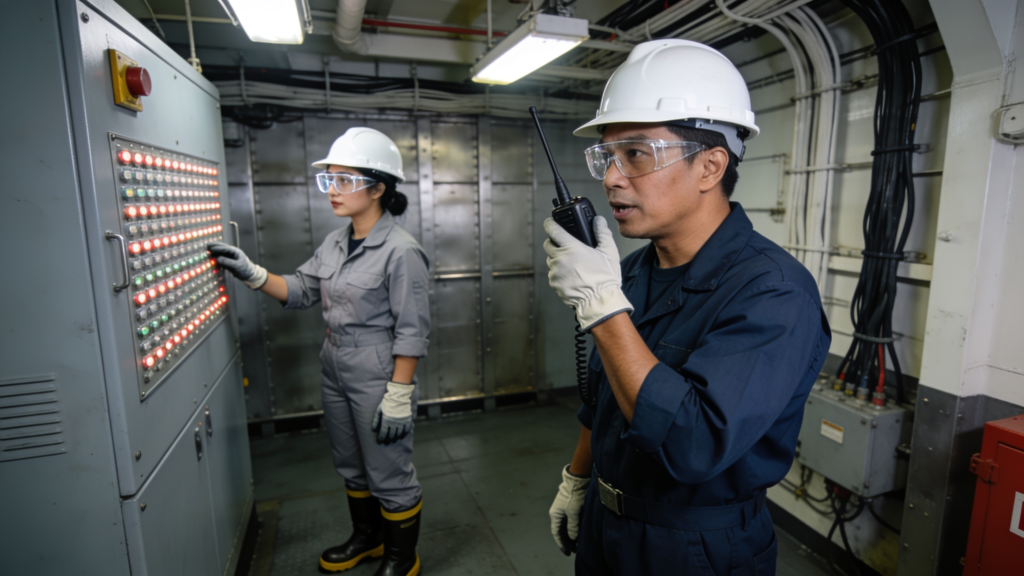
An inspector standing in front of a fire alarm panel forms a view in about fifteen seconds. What the panel is showing, and whether anyone on board can explain it, sets the tone for everything that follows in the inspection. The FSS Code is prescriptive about this. A marine fire alarm panel has a defined […]

01
Oct
Oct
A methanol-fuelled engine room presents a problem no conventional detection layout was designed for. Methanol burns with a pale, nearly invisible flame producing very little smoke, so an optical smoke detector can sit directly above a developing pool fire and report nothing at all. Ammonia inverts the problem, since the hazard reaching the crew first […]

29
Sep
Sep
Stand next to a running main engine and a fire alarm sounder can be perfectly compliant on paper and completely inaudible in practice. The crew member who cannot hear it will tell you the system is broken. The datasheet will tell you it produces 100 decibels at one metre. Both can be correct at the […]